Artificial intelligence is rapidly transforming the way organizations work.
From drafting content and summarizing meetings to analyzing data and automating repetitive tasks, AI helps businesses improve productivity, accelerate decision-making, and unlock new efficiencies that are difficult to ignore.
But as organizations rush to adopt AI, many are overlooking a critical reality: AI adoption is outpacing AI governance.
Organizations don't need to build complex governance programs overnight, but they do need a foundation. That foundation begins with a handful of clear, practical controls that define how AI can be used responsibly to reduce risk without slowing innovation down.
Shadow AI is the new shadow IT
For many IT and security leaders, the rise of AI feels familiar.
A decade ago, organizations grappled with shadow IT: unauthorized applications and services adopted outside the visibility and control of IT teams. Today, a similar trend is emerging with AI.
But unlike traditional shadow IT, the potential impact can vary depending on what systems these tools connect to and what actions they can perform. Without clear governance and control, organizations may have limited visibility into:
- Which AI tools are being used
- What information those tools can access
- What impact AI could have on connected systems
- Who is responsible for managing associated risks
As AI becomes embedded in business operations, organizations need governance controls that provide structure without limiting innovation.
But before organizations can govern AI, they need visibility into how it's being used. Without visibility, it's difficult to assess risk, enforce policies, identify unauthorized AI usage, or understand what data AI systems can access.
Essential AI governance controls
Responsible AI adoption isn't about creating dozens of new policies. It's about ensuring the right governance controls are in place to support safe and effective use of AI.
While some organizations may choose to create a dedicated AI policy, many of these controls can be incorporated into existing governance, security, and operational processes.
The goal isn't to eliminate risk or slow innovation. It's to establish guardrails that help organizations realize the benefits of AI while reducing exposure when mistakes happen, data is mishandled, or outputs can't be trusted.
The following five governance controls provide a practical foundation for responsible AI adoption.
1. AI asset inventory
You can't govern AI you can't see.
An AI asset inventory helps organizations identify what AI tools are being used, who owns them, what business purpose they serve, and what data they can access. Many organizations discover significantly more AI usage than expected once they begin documenting tools and workflows.
Key questions this control answers:
- What AI tools are being used?
- Who owns them?
- What data can they access?
- Have they been approved?
Without visibility, it's difficult to assess risk, manage access, or establish accountability.
2. Acceptable use policy
Acceptable use controls define the rules for how employees can use AI.
It should provide guidance on approved tools, prohibited use cases, data handling requirements, and when human review is required.
Clear expectations help employees use AI confidently while reducing the risk of exposing sensitive information or misusing AI-generated content.
Key questions this control answers:
-
Which AI tools are approved?
-
What data can be shared with AI?
-
What information is off-limits?
-
When is human review required?
3. Access and least privilege
Many AI tools are connected to email, file repositories, collaboration platforms, and CRM systems. While these integrations improve productivity, they can also create risk if permissions are too broad.
Organizations should apply the principle of least privilege, ensuring AI tools only have access to the information necessary to perform their intended function.
Key questions this control answers:
-
What systems can the AI access?
-
Do they need access to this system to perform the task they’re designated for?
-
Is the risk introduced by this connection justified by the business impact
-
Are permissions reviewed regularly?
4. Human review requirements
AI can accelerate work, but accountability remains a human responsibility.
Organizations should define when AI-generated outputs must be reviewed before they are shared or acted upon, particularly for customer communications, financial analysis, legal content, or security recommendations.
Key questions this control answers:
-
Which outputs require review?
-
Who is responsible for validating them?
-
How are errors identified and corrected?
5. Incident response preparedness
Organizations should be prepared to respond to AI-related incidents, whether they involve data exposure, unauthorized AI usage, hallucinated outputs, or compliance concerns.
Effective response requires rapid detection and containment of rogue or autonomous AI actions, capabilities that legacy security tools and traditional workflows are not designed to provide.
An AI incident response plan establishes clear procedures for investigating issues, escalating concerns, and minimizing impact.
Key questions this control answers:
-
What constitutes an AI incident?
-
Who is responsible for responding?
-
How will the issue be contained and remediated?
Together, these five governance controls create the guardrails organizations need to adopt AI responsibly, balancing innovation with risk management.
Adopt AI Confidently with Field Effect MDR
Effective AI governance starts with visibility. Organizations can't enforce policies, assess risk, or identify unauthorized AI usage if they don't know what AI tools are operating within their environment.
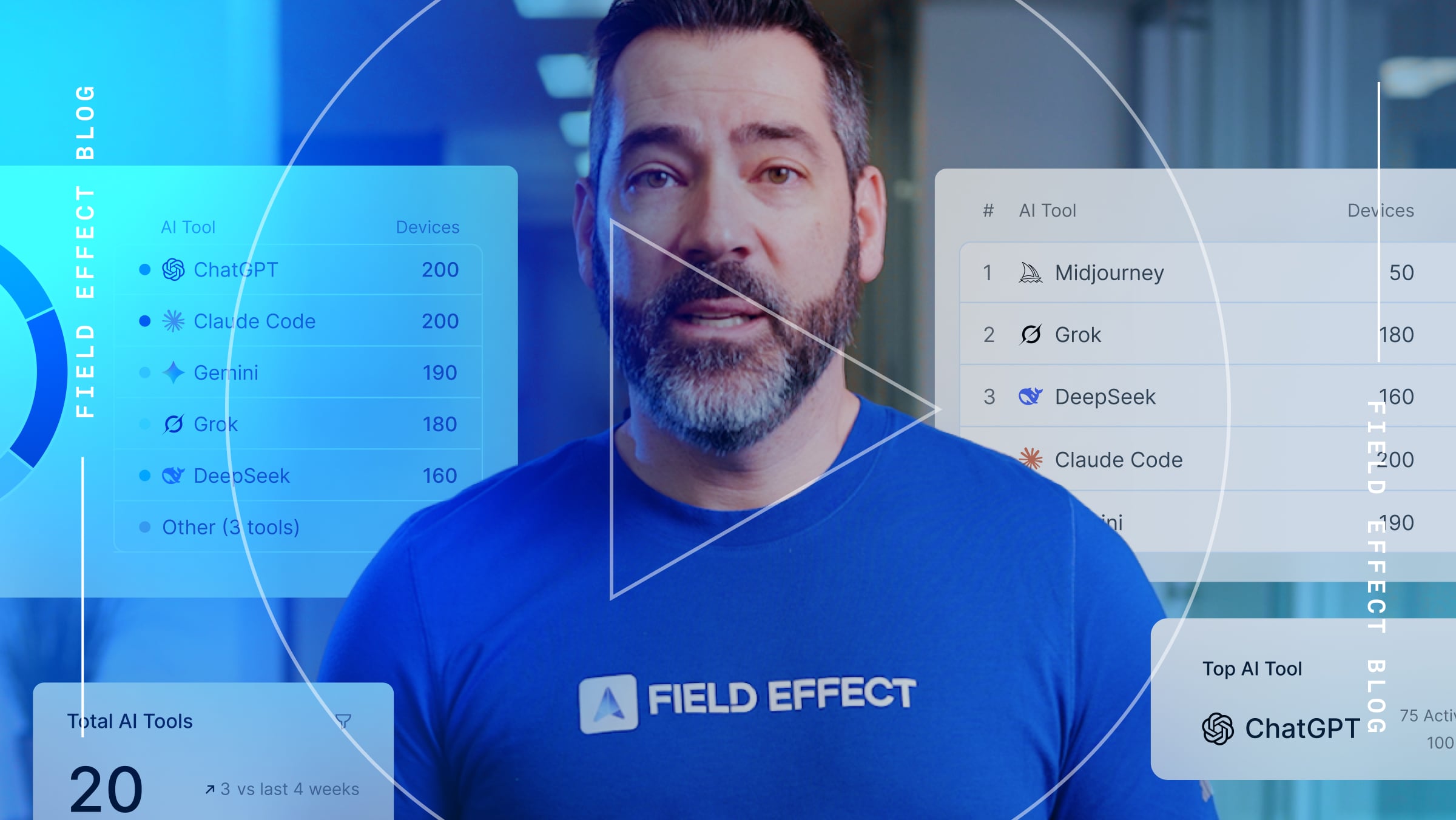
Field Effect's AI Detection and Response help organizations shine a light on AI tools and usage, reducing blind spots, and supporting stronger AI governance across the environment. With a clearer understanding of their AI tool risk, organizations can make more informed decisions about how AI adopted across their organization.
Frequently asked questions
What is AI governance and why does it matter? AI asset inventories are a valuable first step in identifying how and where AI tools are being used across an organization. Many organizations discover significantly more AI adoption than expected once they begin systematically documenting AI tools, their owners, business purposes, and data access requirements. However, a substantial amount of AI usage often occurs outside the visibility and oversight of IT teams. To effectively identify and manage AI use, organizations should leverage tools that provide comprehensive visibility into the applications and services being used across the environment. This holistic view helps uncover unauthorized or unsanctioned AI usage, enabling better governance, risk management, and compliance.
What is shadow AI? Shadow AI refers to AI tools and applications being used within an organization without the knowledge or approval of IT and security teams. Similar to shadow IT, it creates blind spots around what data AI can access, what actions it can take, and who is accountable when something goes wrong.
What are the most important AI governance controls? A strong foundation includes five key controls: an AI asset inventory, an acceptable use policy, access and least privilege permissions, human review requirements, and an incident response plan. Together, these help businesses adopt AI confidently while managing risk.
How do I know what AI tools are being used in my organization? Start with an AI asset inventory. Many organizations discover significantly more AI usage than expected once they begin systematically documenting tools, owners, business purposes, and data access. Visibility is the first step to governance.
What is the principle of least privilege in the context of AI? Least privilege means AI tools should only have access to the data and systems they strictly need to perform their intended function. Since many AI tools connect to email, file storage, and CRM platforms, keeping permissions narrow reduces the risk of data exposure if something goes wrong.
When should AI-generated outputs require human review? Human review is especially important for customer communications, financial analysis, legal content, and security recommendations. Organizations should define in advance which output types require sign-off, who is responsible, and how errors are identified and corrected.
What counts as an AI incident? An AI incident can include data exposure through an AI tool, unauthorized AI usage, hallucinated or inaccurate outputs with real-world consequences, or AI actions that raise compliance concerns. Organizations should have a clear incident response plan that defines what qualifies, who responds, and how issues are contained.
Do I need a dedicated AI policy to govern AI effectively? Not necessarily. Many governance controls can be incorporated into existing security, IT, and operational policies. The priority is having the right guardrails in place, not creating new documentation for its own sake.